
Concept boundary
Working agreement
Standing rules for how work is done in this project.
It is
- Project-wide rules
- Validation standards
It is not
- One task’s checklist
- A transcript dump
Choose one real, low-risk outcome. You do not need a perfect prompt. Axis should help supply the project context, plan, tools, and proof around an ordinary request.
Proof sequence
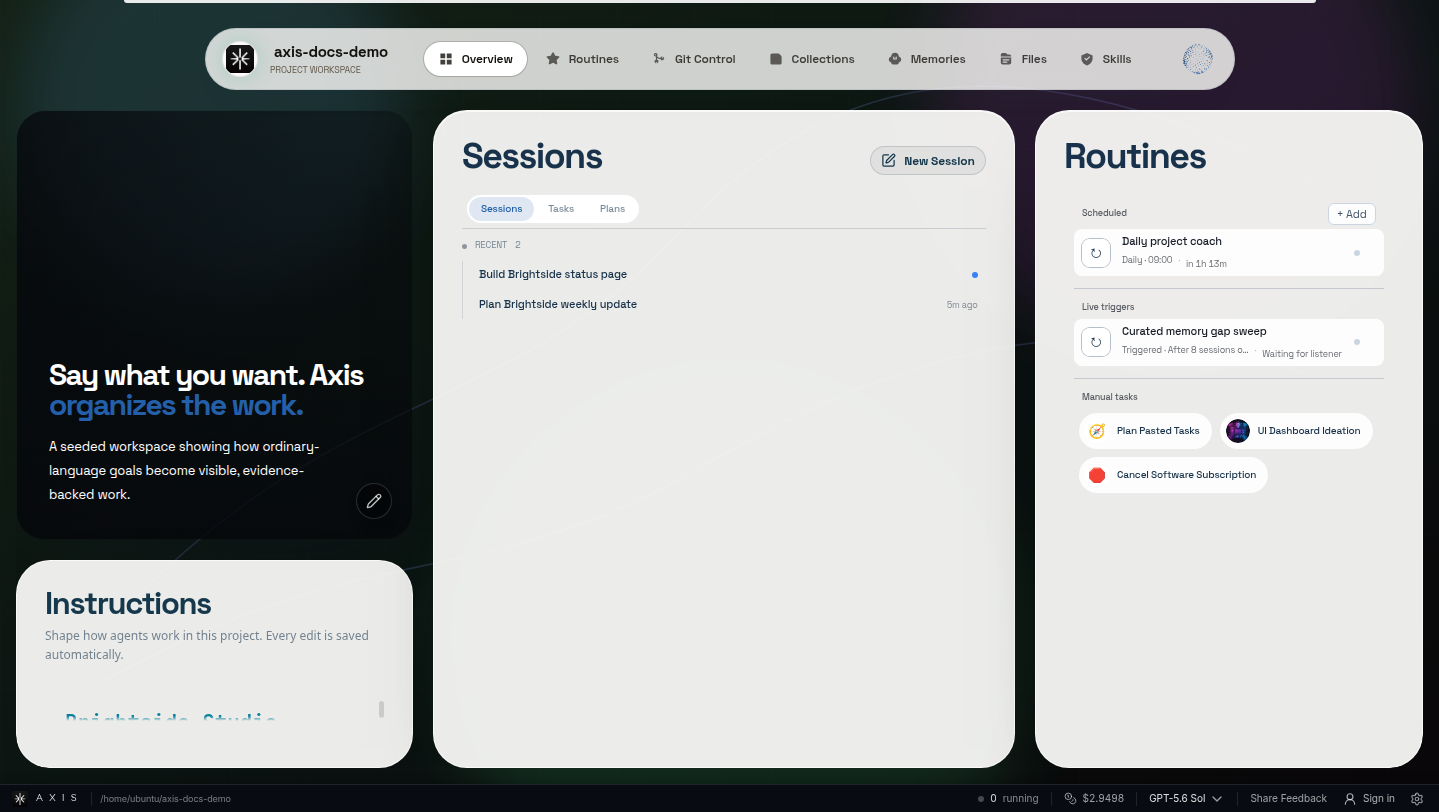
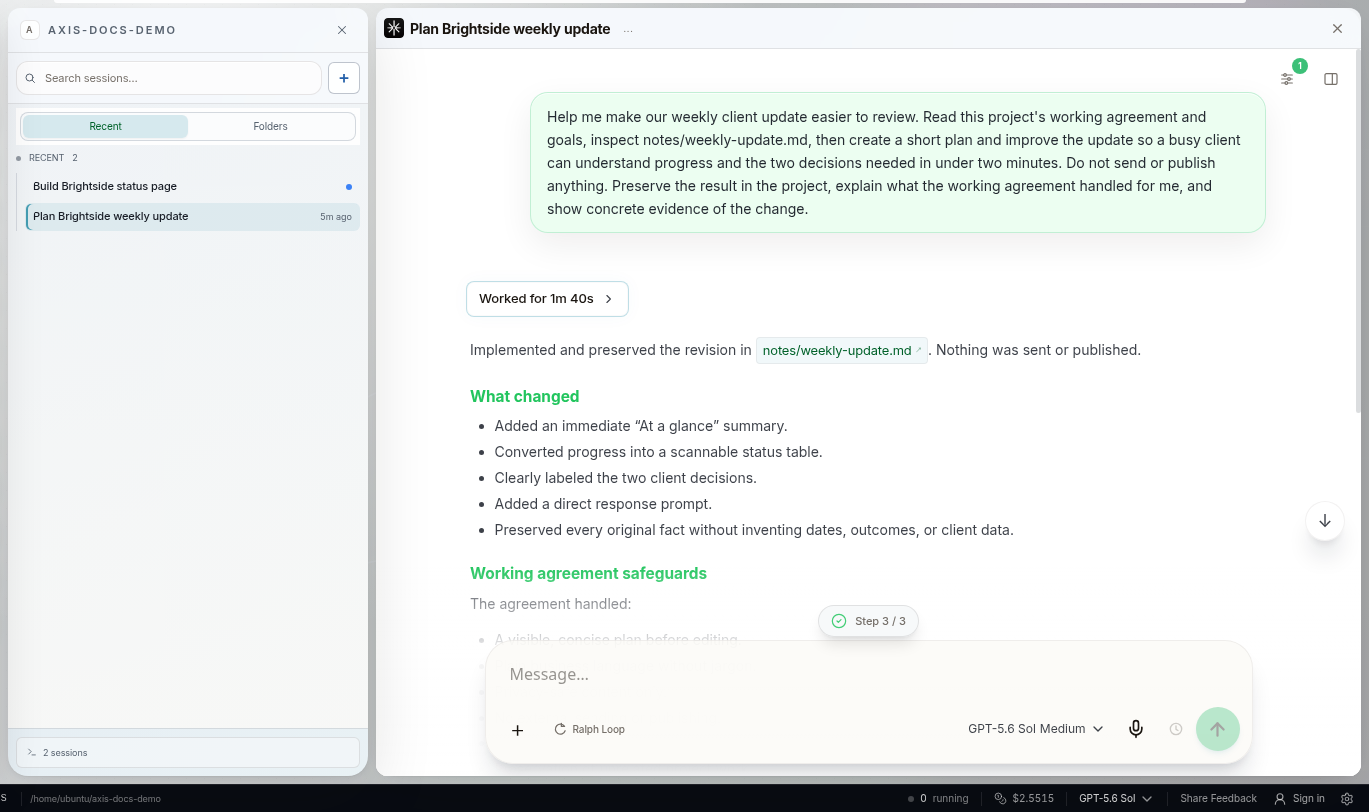
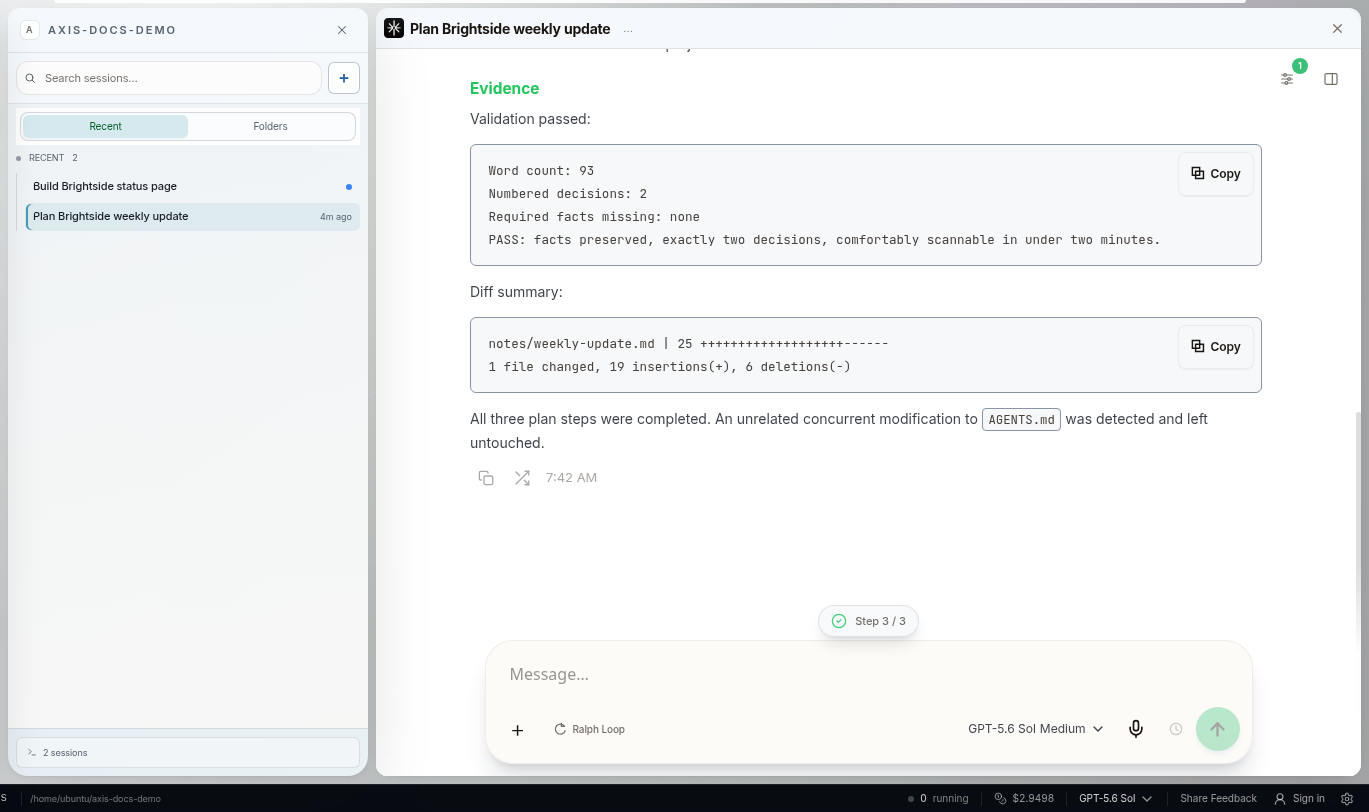
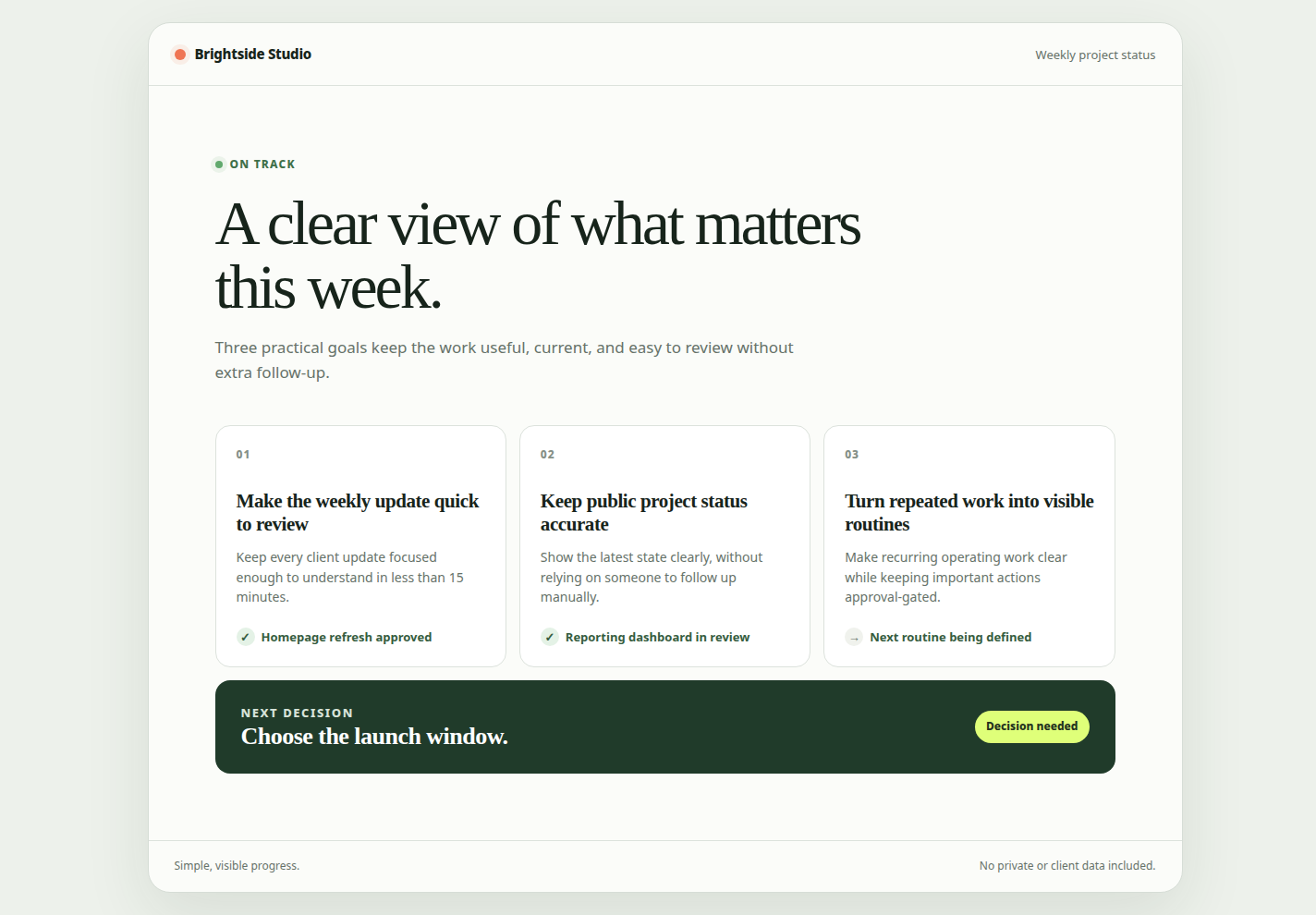
A real Axis session improved a client update without sending or publishing anything.
By the end, you will have:
Open a project that contains the material or system the task belongs to. A project is more than a folder picker: it scopes the working agreement, relevant memory, work plans, services, sessions, and saved results.
For a first mission, use reversible work: improve a small page, investigate an error, organize a report, or review a set of changes.
Describe what you want as you would to a capable colleague:
The settings page feels slow when it first opens. Find the cause, improve it,and show me evidence that the real page is faster and still looks right.You supplied the outcome and the observed problem. Axis and the agent should discover available project rules, inspect the code or source system, form a plan when needed, choose tools, and identify appropriate proof.
If a fact is essential and only you know it, the agent asks. It should not turn every discoverable detail into a questionnaire.
The session becomes the continuing thread for this outcome. Open the Working fold to inspect the chronological work: reasoning, reads, commands, edits, browser actions, and other tool calls.
A multi-step job may show a compact plan above the composer. You can let it run, add a follow-up to the steering queue, or stop it if the direction is wrong.
Concept atlas
Concept boundary
Standing rules for how work is done in this project.
Concept boundary
Lessons or decisions worth recalling later.
Concept boundary
Shared unfinished intent across sessions.
Concept boundary
The supporting record of what happened here.
Open the proof that matches the work:
The agent’s summary helps you navigate. It is not itself proof.
Decide whether the outcome is right, whether the trade-off is acceptable, and whether any consequential next action is authorized. If the work needs a login, message send, deployment, purchase, deletion, or similarly scoped authority, Axis should stop at a clear human checkpoint.
A denial leaves that proposed action unexecuted. An approval authorizes only the action and scope described by the gate.
Preserve only what should survive:
That closes the loop: the next session starts ahead instead of from zero.
You can point to the exact session, the exact evidence, the judgment you made, and the knowledge or open work that will carry forward.