
Improve difficult work beyond the first pass
Axis separates reliable continuation from review loops. Continuation keeps one session awake across phases and waits. An optional review loop adds independent specialists, critics, and convergence checks when a first acceptable answer is not enough.
Add rigor where failure is expensive
Section titled “Add rigor where failure is expensive”Use continuation for multi-phase implementation, builds, external waits, or coordination that must not silently stop. Add a review loop for subjective quality, architecture, security, migrations, or high-regression work where an independent challenge materially improves confidence.
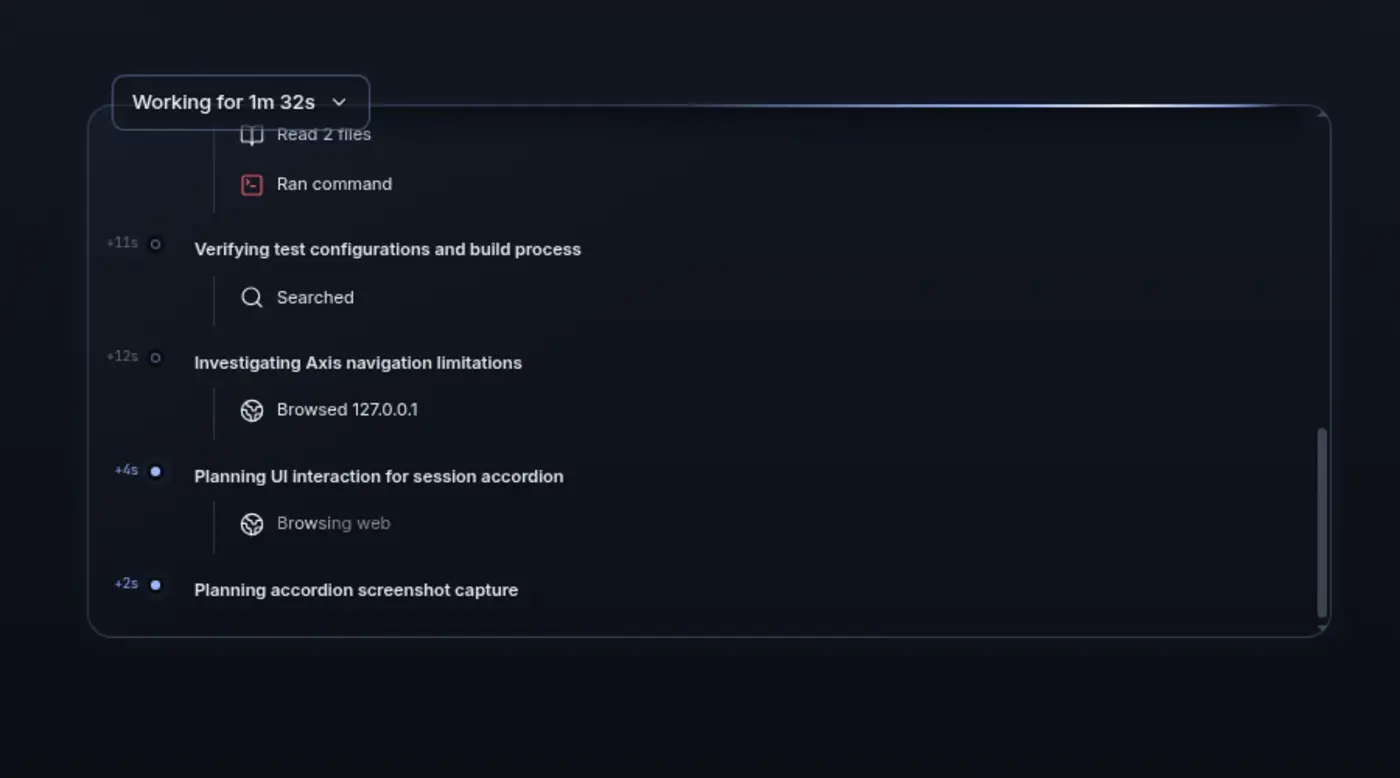
The session remains the durable owner. Review is an added rigor layer, not the mechanism that merely keeps ordinary work alive.
What independent review adds
Section titled “What independent review adds”- Reliable follow-through. The owning session rechecks unresolved work until a real boundary.
- Independent challenge. Specialists and critics test assumptions the author may miss.
- Evidence-based convergence. Iteration stops when meaningful improvements stop appearing.
Mission: add the right level of rigor
Section titled “Mission: add the right level of rigor”- Define the outcome, proof standard, and terminal states.
- Enable continuation for long-running or asynchronous work.
- Decide whether independent review changes the risk or quality enough to justify it.
- Give reviewers a concrete rubric and require evidence for every finding.
- Integrate valid improvements, rerun proof, and stop the loop at convergence.
Stop when evidence converges
Section titled “Stop when evidence converges”Reliable continuation should be normal for work that spans real waits; it does not need an adversarial panel. A review loop costs time and model capacity and should not be added to bounded mechanical work. More iterations are not proof of quality, and reviewers do not replace a human decision about product direction, risk acceptance, or publication.
Related references
Section titled “Related references”Put this to work: Structure the acceptance criteria before adding independent reviewers.